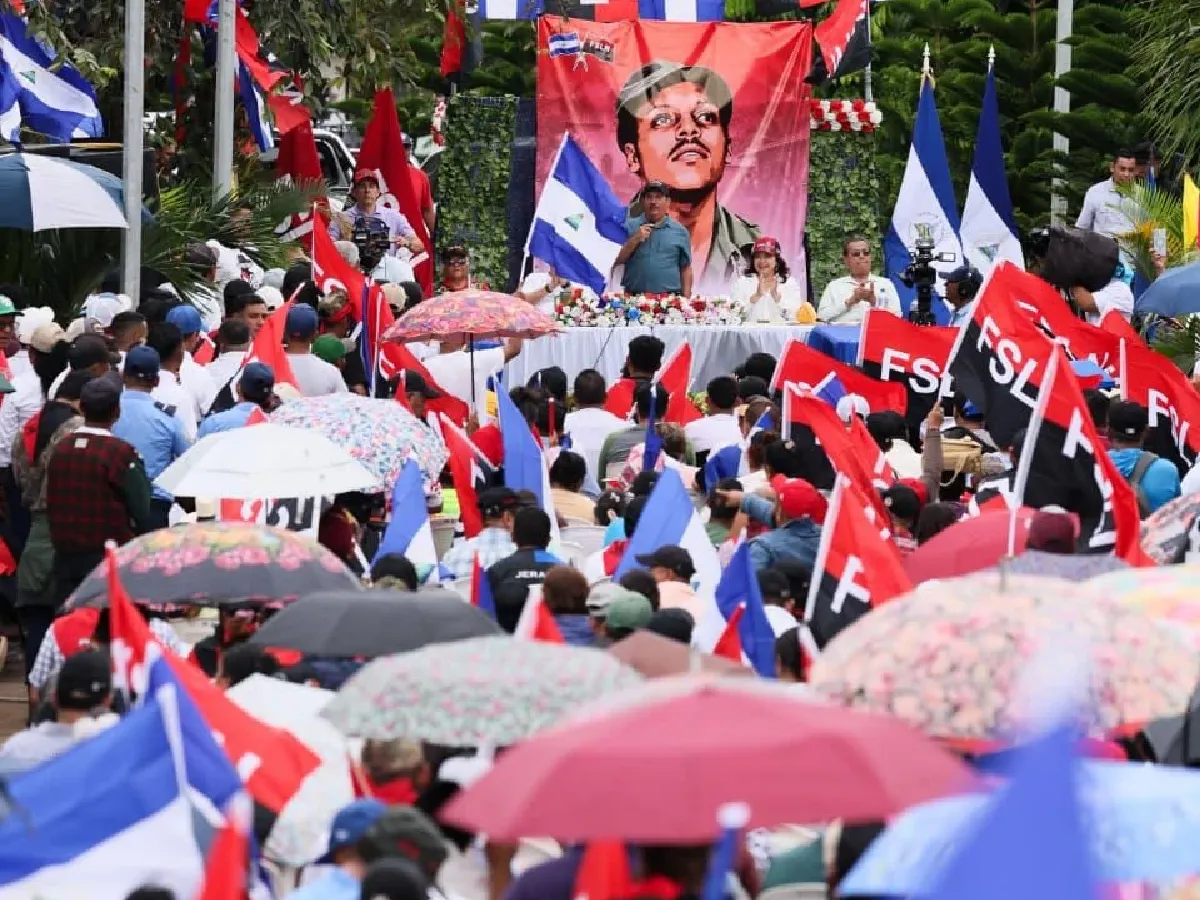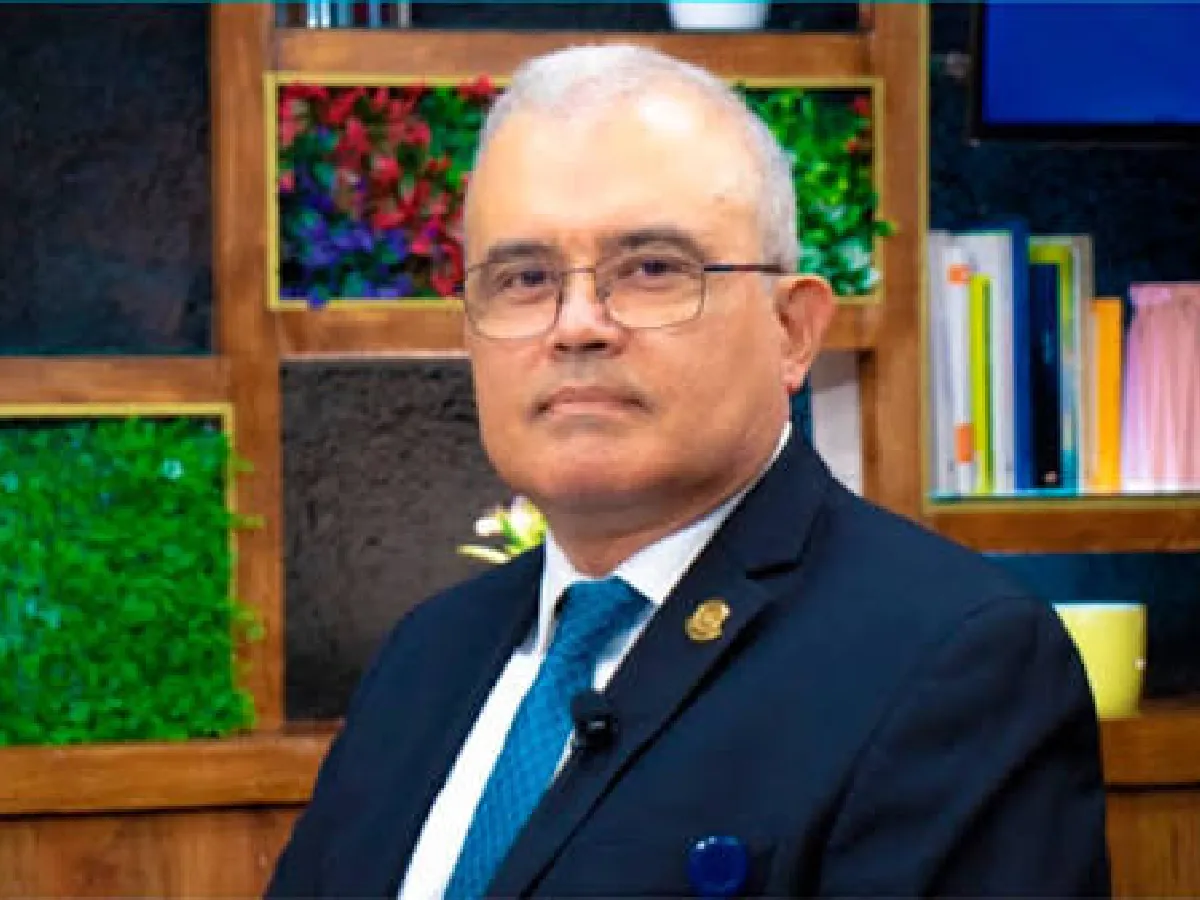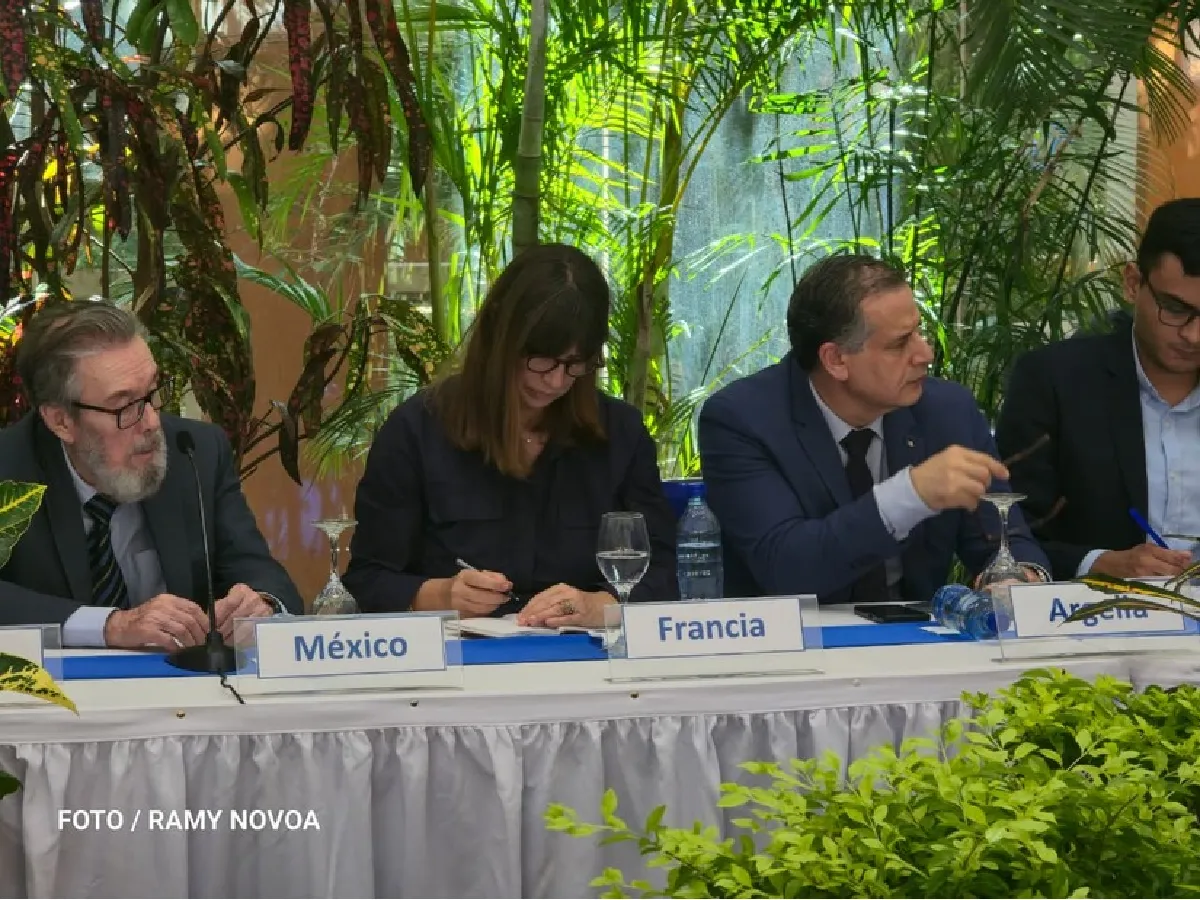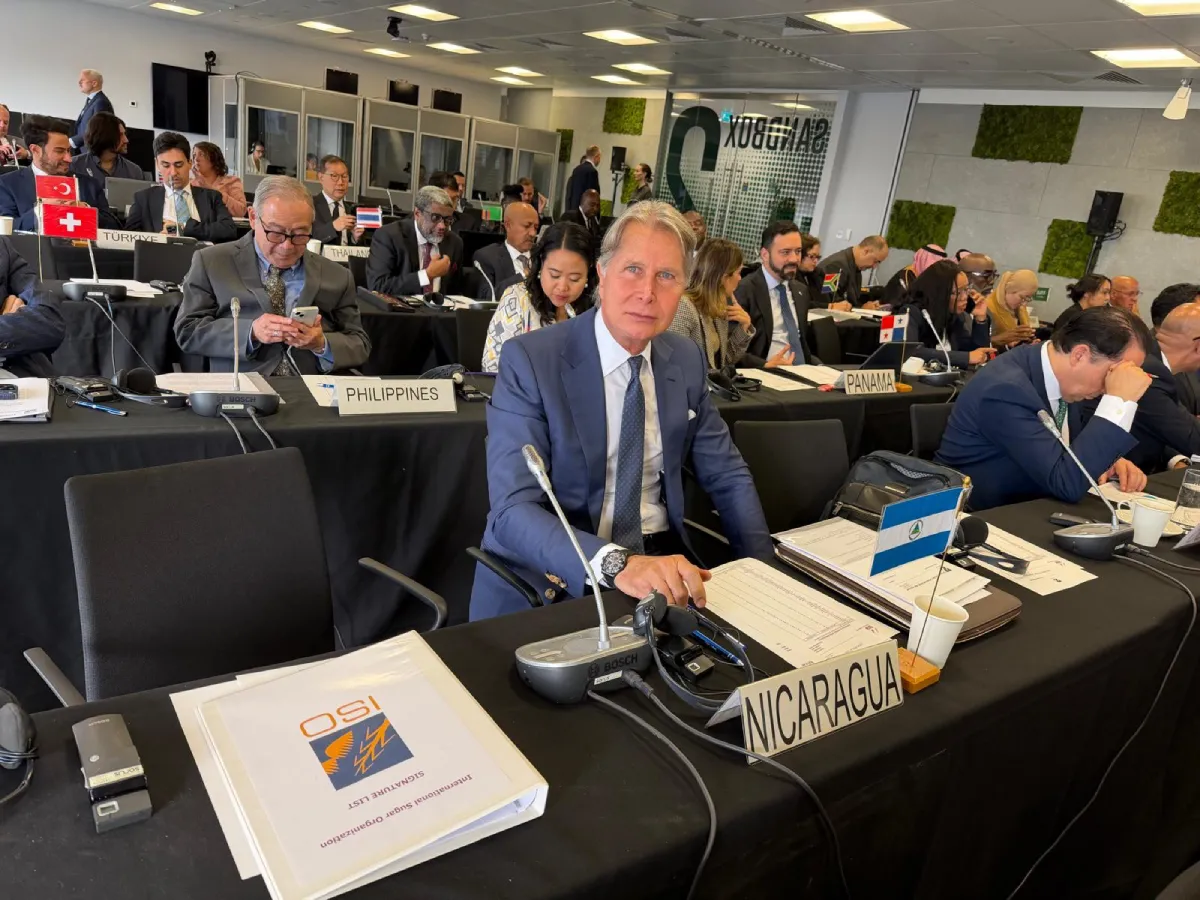








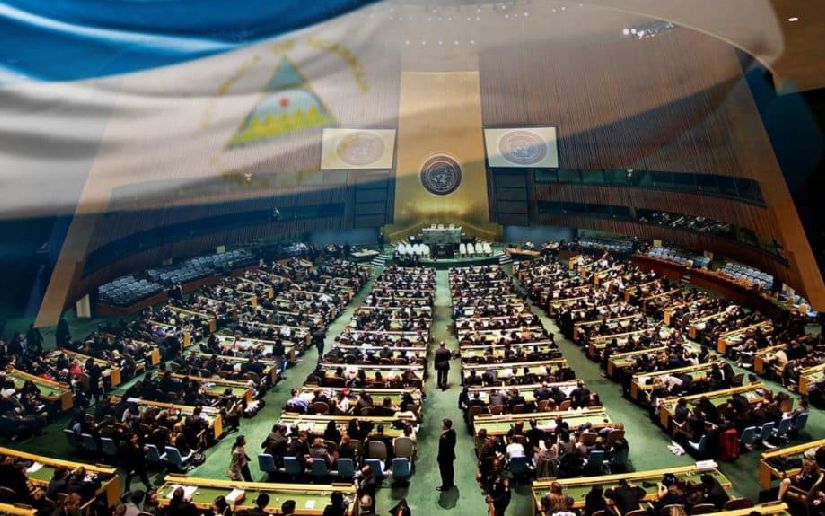
Palabras de Nicaragua, pronunciadas hoy por la Representante Permanente Alterna de Nicaragua ante Naciones Unidas, Compañera Eleane Pichardo, en la Asamblea General de la ONU.
PALABRAS DE NICARAGUA
EN LA PRESENTACIÓN DEL INFORME
DEL CONSEJO DE DERECHOS HUMANOS
Asamblea General de las Naciones Unidas
Nueva York, 31 de Octubre de 2025
Señora Presidenta,
1. Nicaragua se asocia a la Declaración de la República Bolivariana de Venezuela, en nombre del Grupo de Amigos en Defensa de la Carta de las Naciones Unidas.
2. El Gobierno de Reconciliación y Unidad Nacional de la República de Nicaragua levanta su voz clara, firme y soberana para denunciar la politización, selectividad y los dobles raseros que se han impuesto en el tratamiento de los derechos humanos.
3. Rechazamos, con absoluta contundencia, los intentos de convertir al Consejo de Derechos Humanos en un tribunal político, manipulado por las potencias imperialistas y neocoloniales que pretenden usar este espacio como instrumento de dominación, chantaje y agresión contra los Pueblos libres del Mundo.
Señora Presidenta,
4. Los Derechos Humanos son universales e indivisibles, no es privilegio reservado para ser manoseado por los Países Occidentales y sus charlatanes, ni es una herramienta de guerra de quienes destruyen países enteros bajo el disfraz de lo que ellos interpretan como su Democracia, prefacio para continuar el saqueo de los Pueblos en Desarrollo.
5. Hoy, quienes hablan de Derechos Humanos son los mismos que han masacrado Pueblos enteros, ocupado Naciones Soberanas, impuesto bloqueos criminales y saqueados recursos naturales, sembrando dolor, hambre y destrucción.
6. Nicaragua rechaza de raíz esa doble moral imperial que pretende juzgar a los pueblos dignos y libres, a la vez que apoyan y ante los crímenes del Colonialismo moderno, ante el genocidio contra el Pueblo Palestino y ante las guerras promovidas por los mismos que se autoproclaman “defensores de los Derechos Humanos”.
Señora Presidenta,
7. Rechazamos los llamados “mandatos específicos por país”, mecanismos selectivos y carentes de objetividad que violan los Principios de Soberanía, Igualdad y No Injerencia consagrados en la Carta de las Naciones Unidas.
8. Estos mecanismos, impuestos sin el consentimiento del país afectado, son instrumentos de injerencia política, creados y financiados por los mismos que imponen medidas coercitivas unilaterales, verdaderos crímenes de lesa humanidad que atentan contra los Derechos Económicos, Sociales y Culturales de nuestros Pueblos.
9. Los supuestos “Grupos de Expertos sobre determinados países” no representan ni legitimidad ni verdad. Es una farsa fabricada por Países Europeos, cuyo único objetivo es desacreditar a los Gobiernos legítimos que no se someten a sus designios ni agendas egoístas e imperiales.
10. Rechazamos esos informes plagados de mentiras, tergiversaciones y falsedades, construidos con información manipulada por ONGs mercenarias, financiadas por los mismos que hoy hipócritamente y sinvergüenza pretenden erigirse en guardianes de la moral mundial, para curarse en salud de sus crímenes permanentes.
Señora Presidenta,
11. Con dignidad y soberanía, Nicaragua sigue avanzando, sin tutelajes ni imposiciones extranjeras, en la construcción de un Modelo de Justicia Social, de Igualdad, de Derechos y de Paz.
12. Defendemos los Derechos Humanos reales y concretos: el Derecho a la Vida, a la Salud, a la Educación Gratuita, al Trabajo Digno, a la Vivienda, a la Energía, al Agua Potable, a la Seguridad, al Desarrollo y a la Autodeterminación.
13. Mientras los poderosos gastan miles de millones en guerras, Nicaragua invierte en Pueblos Libres, en Mujeres empoderadas, en Juventud consciente, en Comunidades Indígenas con Derechos, en Familias que viven con Esperanza y Dignidad.
Señora Presidenta,
14. Nicaragua denuncia ante esta Asamblea la hipocresía, la arrogancia y la impunidad del imperialismo estadounidense y europeo, responsables de los peores crímenes de la historia moderna.
15. Rechazamos sus medidas coercitivas unilaterales, sus bloqueos económicos, sus campañas de difamación, y sus intentos de dictar lecciones de moral a los Pueblos que eligen ser Libres.
16. Reafirmamos que la Soberanía no se negocia, la Dignidad no se vende y la Independencia se defiende.
17. Nicaragua llama a los Pueblos del Mundo a reivindicar el verdadero sentido de los Derechos Humanos: la Justicia Social, la Paz, la Solidaridad, la Cooperación y el Respeto Mutuo.
18. Convocamos a este Consejo y a esta Asamblea a romper las cadenas de la manipulación, a defender la verdad frente a la mentira institucionalizada, y a reconocer el Derecho inalienable de cada Nación a decidir su propio Destino, sin amenazas ni imposiciones.
19. Nicaragua seguirá alzando su voz con valentía, con firmeza y con la fuerza de su Historia Revolucionaria, para defender la Soberanía, la Paz y la Dignidad de los Pueblos.
20. Porque la Verdad, la Justicia y la Independencia no se negocian: se defienden, se conquistan y se honran.
Muchas gracias.
-------------------------------------------------------------------------------------------------------------------------------
REMARKS BY NICARAGUA
IN THE DEBATE ON THE REPORT BY THE INTERNATIONAL COURT OF JUSTICE
United Nations General Assembly
New York, October 31st 2025
Madam President of the Assembly,
Mr. President of the International Court of Justice,
1. We are grateful for the presentation of the report A/80/4 and we associate ourselves with the statement to be delivered by Uganda on behalf of the Non-Aligned Movement.
Madam President,
2. Since 1947, the International Court of Justice has dealt with about 200 cases, including contentious disputes and advisory opinions on legal issues, and this year alone it has 25 pending cases on its list. In its budget for 2026, the Court points out a discrepancy between its increasing activity and the availability of allocated resources, and notes that one of its objectives is to be able to “adapt to the risks created by a higher public profile of the Court.”
3. The increasing number and diversity of cases brought before the Court has played a fundamental role in expanding the Court's role both in scope and in awareness. Likewise, the requests for advisory opinions reflect the relevance of the Court in addressing urgent legal and moral disputes for its member states and for the United Nations Organization in particular.
4. When States ignore court rulings or selectively apply legal norms, the authority of inter-national law is eroded. This double standard weakens the perception of fairness and universality on which international law and its institutions depend.
5. However, despite this, the prominence of the Court indicates a broader recognition of law as an essential component of global governance which is really nothing more than the growing demand for peaceful and legal solutions to the world's most urgent conflicts.
Madam President,
6. Nicaragua is one of the states that has resorted to the International Court of Justice the most, with 15 cases to its credit along with interventions in consultative processes. Nicaragua is currently a party to the case concerning Alleged violations of certain international obligations with respect to the Occupied Palestinian Territory (Nicaragua v. Germany). Nicaragua submitted its Report on time last July, and will now proceed to respond to the Preliminary and Admissibility Objections submitted by Germany.
7. For many developing states, filing a case before the International Court of Justice (ICJ) represents a significant financial burden. This should also be seen as a serious impediment to maximizing the use of the Court, as the costs associated with filing a case can become prohibitively high for States with limited resources. Developing states may hesitate to bring legitimate claims or to intervene in a case simply because of the cost.
8. The foregoing should serve to rethink the mandate and regulations approved in 2004 on the functioning of the Secretary-General's Trust Fund to assist States in the Settlement of Disputes through the International Court of Justice, since it contains important limitations that highlight and accentuate the economic gap, with direct implications for the rule of law at the international level.
9. Similarly, Nicaragua takes note of the report on the said Trust Fund, which indicates that no voluntary contributions were made during the period under review and calls on countries to make contributions to it.
Madam President,
10. In previous reports the Court announced a series of practical procedural decisions that have contributed to the effectiveness in terms of process. Likewise, the same report announced the creation of a Special Committee of 3 Judges to supervise the application of the Provisional Measures ordered by the Court, and it was predicted that the committee will examine the information provided by the parties in this regard, will periodically inform the Court and will recommend possible options in the matter. Nicaragua considers that it would be an important step if such information were somehow included in the annual reports that the Court submits to this General Assembly.
11. In another order of ideas, the report indicates that 122 states have participated in the consultative procedures before the International Court of Justice in some or other capacity, including in the opinion on the Obligations of States with respect to Climate Change. Although it is true that advisory opinions are not mandatory, they are the expression of current law and in this case coming from the main judicial organ of the United Nations, which recognized that states not only have duties under the relevant treaties but also under customary law.
12. In particular, the additional obligation to take the initiative by limiting their gas emissions, to implement measures capable of achieving the established objectives and to use all means at their disposal to prevent activities carried out within their jurisdiction or under their control from causing significant damage in accordance both with their common but differentiated responsibilities and too with their respective capabilities. The opinion concludes with the reaffirmation of a fundamental principle, namely, that the failure of a State to fulfill any of the above-mentioned obligations constitutes an internationally wrongful act entailing the responsibility of that State.
Madam President,
13. The rule of law at the international level is at a critical moment, and we cannot afford setbacks that erode the most fundamental norms of relations between States. Budgets to promote peace and the peaceful resolution of disputes should reflect this commitment, in particular by those countries with the most resources, who have allocated billions for their military budgets which have increased significantly over the last two years.
14. Nicaragua takes this opportunity to reaffirm that in all the cases in which it has been a party, it has always faithfully fulfilled its international obligations, and that it expects reciprocity in this regard.
Thank you very much.