







AVANCES EN DERECHOS DE LOS PUEBLOS INDÍGENAS Y AFRODESCENDIENTES COSTA CARIBE EN NICARAGUA
Los Pueblos Originarios (Miskitu, Mayagna, Ulwa y Rama) y Afrodescendientes (Creoles y Garífunas) de Nicaragua viven mayoritariamente en dos Regiones Autónomas del Caribe del país y un Régimen Especial de Desarrollo en el Alto Wangki-Bocay.
Antes de la Revolución Sandinista de 1979, los Pueblos Originarios y Afrodescendientes del Caribe de Nicaragua estaban excluidos de la vida social, económica y política del país, separados del resto del país por la falta de vías de comunicación y sin una presencia real y efectiva de instituciones estatales que mantuvieron a esta población en abandono total.
Las formas de explotación generadas por el modelo extractivo de los enclaves económicos heredados de la colonia y el período neocolonial generaron las más profundas condiciones de miseria y pobreza, que sumados a la exclusión produjeron los más deplorables indicadores económicos y sociales en el país.
La Revolución Popular Sandinista, entre 1979 y 1990, generó una transformación estructural basada en el reconocimiento de los derechos ancestrales de la población originaria y afrodescendiente. La nueva Constitución Política, aprobada en enero 1987, incluyó el respeto a su identidad cultural, lenguas y costumbres.
El reconocimiento constitucional a los derechos ancestrales de la población originaria y afrodescendiente, se expresaría con mayor precisión en el Estatuto de Autonomía, aprobada en octubre de 1987, que brinda el marco para la inclusión real de esta población, permitiendo por primera vez en la historia su participación plena en la vida política, económica y social del país y el reconocimiento efectivo a sus derechos, entre ellos, la tenencia comunal de la tierra, la representación efectiva en la vida política nacional y el reconocimiento a las formas propias de organización de cada pueblo y comunidad, sentando las bases para el desarrollo pleno de su bienestar, con pleno respeto por parte del Estado a su identidad cultural, tradiciones y costumbres.
Durante los últimos 18 años el Buen Gobierno Sandinista ha ampliado los derechos, facilitado mayor participación y protagonismo comunal, regional y nacional, generando mayor bienestar para la población originaria y afrodescendiente que habita en las Regiones Autónomas del Caribe de Nicaragua, disminuyendo la pobreza, erradicando la exclusión y la miseria a la vez que ha fortalecido la inclusión y la unidad nacional.
I. Marco Jurídico. El Reconocimiento de los Derechos
Nicaragua cuenta con uno de los marcos jurídicos más avanzados del mundo en materia de reconocimiento efectivo a los derechos de pueblos originarios y afrodescendientes.
La Constitución Política de la República, reconoce el derecho de los pueblos originarios y afrodescendientes a vivir y desarrollarse bajo sus propias formas de organización social, cultural y política, así como el respeto a sus tierras comunales.
La Ley de Autonomía de las Regiones de la Costa Caribe de Nicaragua, que tiene rango constitucional, garantiza la participación efectiva de los pueblos originarios y afrodescendientes en la gestión de sus propios asuntos.
Un conjunto de leyes específicas como La Ley de Demarcación y Titulación de las Tierras, Ley de Lenguas, Ley General de Educación (que incorpora el Sistema Educativo Autonómico Regional), la Ley General de Salud (que incorpora el Sistema de Salud con Enfoque Intercultural y reconoce la Medicina Tradicional y Ancestral) y el Decreto de Creación de la Región Especial de Desarrollo Alto Wangki-Bocay, forman parte del Marco Jurídico Nacional y Regional que promueve los derechos particulares de las comunidades originarias y afrodescendientes del Caribe de Nicaragua.
Un precepto constitucional establece que ningún proyecto que se desarrolle o afecte el territorio o las comunidades originarias y afrodescendientes puede ser implementado sin la aprobación expresa de la institucionalidad autonómica regional (Gobiernos Comunales, Territoriales y Regionales).
Todos estos instrumentos legales definen el carácter multiétnico, multilingüe y pluricultural del Estado de Nicaragua. Permiten que Nicaragua no solo reconozca su diversidad, sino que la convierta en una fortaleza para el desarrollo, la paz social y la gobernanza, consolidando un Estado Unitario, Inclusivo y con identidad propia.
Adicionalmente, el Estado de Nicaragua ha ratificado Convenios Internacionales como la Declaración Universal de los Pueblos Indígenas, El Convenio 169 de la OIT y la Agenda 2030 de Naciones Unidas, los cuales fortalecen el marco jurídico nacional.
II. Fortalecimiento del Régimen de Autonomía. Titulación Territorial y Seguridad Jurídica
La aprobación del Régimen de Autonomía presupuso un paso inédito de la República de Nicaragua en el reconocimiento de los derechos ancestrales de su población originaria y afrodescendiente.
La Ley de Autonomía delinea una institucionalidad gobernada regionalmente desde dos Consejos Regionales Autónomos, electos en 30 circunscripciones electorales, que reflejan las particularidades culturales y étnicas de cada circunscripción, asegurando la representación de cada pueblo originario y afrodescendiente en la conformación de cada Parlamento Regional.
La Ley de Autonomía define y regula la relación entre el Gobierno Nacional y la Institucionalidad Autonómica, definiendo derechos y obligaciones de cada parte.
La Ley de Demarcación y Titulación de Tierras definió la relación del Gobierno Nacional con los Gobiernos Regionales y Comunales y Territoriales en lo que respecta a los derechos ancestrales de su territorio.
El Gobierno Sandinista, a partir de 2007 dio un impulso extraordinario al proceso de demarcación y titulación de tierras, que ha titulado 37,000 km2 en 23 Territorios Indígenas y Afrodescendientes, un hito mundial, al titular cerca del 30% del territorio nacional a favor de pueblos originarios y afrodescendientes.
Los Gobiernos Regionales Autónomos, Territoriales y Comunales, junto a las Instituciones del Estado Nacional han establecido un mecanismo de coordinación y articulación sobre asuntos vinculados a la participación en materia de educación, salud, transporte, administración de los recursos naturales, seguridad ciudadana, alimentaria y humana, fortaleciendo la lucha contra la pobreza y el reconocimiento de los derechos ancestrales.
Estos mecanismos de articulación y coordinación fortalecen también el consentimiento previo, libre e informado sobre las propuestas del Gobierno Nacional dentro y sobre los territorios y comunidades.
III. PROMOVIENDO BIENESTAR. REDUCCIÓN DE LA BRECHA HISTÓRICA.
a. Infraestructura Vial. El fin de Aislamiento Histórico.
Hasta el año 2007 el territorio del Caribe Nicaragüense solo contaba con 68 km de carretera asfaltada. Ninguna de las dos Cabeceras Regionales tenía conectividad terrestre estable con el resto del país, al igual de la gran mayoría de los municipios de estas Regiones.
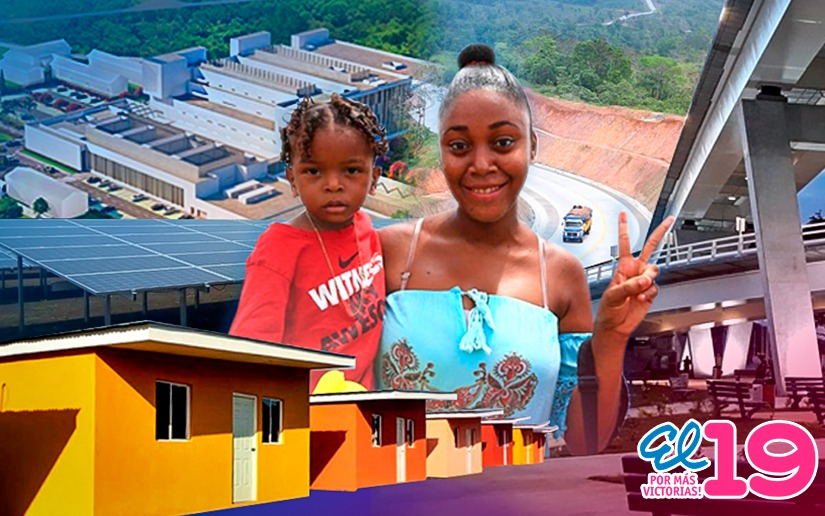
Desde 2007, el Gobierno Sandinista ha construido más de 700 km de carretera de concreto hidráulico, permitiendo que todos los municipios, exceptuando los insulares, estén conectados con el resto del país por vía terrestre.
La construcción de carreteras de concreto y más de 50 puentes, durante los últimos 8 años, permitió unir ambas cabeceras regionales con el resto del país, finalizando la histórica separación física, promoviendo el comercio, la producción, la movilización segura de las familias y el acceso a mayores y mejores servicios estatales y privados.
Esta inversión en infraestructura vial ha estado acompañada de inversiones en medios de transporte dignos, que no existían anteriormente, mejorando la seguridad y la calidad del servicio de transporte para la población originaria y afrodescendiente.
Los históricos avances en conectividad terrestre han estado acompañados también por una fuerte inversión en el mejoramiento de la conectividad aérea, a través de los aeropuertos de Bilwi, Bluefields y Corn Island y acuática en los puertos del Rama y el Bluff, así como el mejoramiento de los pequeños embarcaderos comunales, a través del Programa de Mejoramiento de Muelles Comunales.
El inicio de la construcción del Puerto de Aguas Profundas del Caribe, que junto a la carretera de concreto recientemente construida, permitirá finalmente a los nicaragüenses tener salida hacia los principales mercados de Norteamérica, Europa, Mar Caribe y otras regiones del mundo.
b. Electrificación, Agua y Saneamiento
Hasta 2007 solo un 25% de la población en las Regiones del Caribe tenía acceso a la energía eléctrica, exclusivamente en las Cabeceras Regionales y algunas municipales, con un servicio irregular a partir de plantas aisladas. A la fecha la cobertura eléctrica ha alcanzado 99.5%.
Las Telecomunicaciones, prácticamente inexistentes, se han ampliado a todos los municipios, territorios y comunidades de las regiones, a partir de la construcción de más de 2,800 km de fibra óptica y la disponibilidad de telefonía celular en todos los municipios.
Un avance notable ha sido el acceso a agua y saneamiento para las poblaciones asentadas en las cabeceras regionales y municipales de las regiones, lo que era inexistente antes de 2007.
c. Salud Intercultural
Uno de los mayores avances en el bienestar de las familias de las Regiones, ha sido el acceso gratuito a la salud, a través del Modelo de Salud Familiar y Comunitario, que reconoce, respeta e incluye los saberes ancestrales de la medicina tradicional, ejercida por sukias, curanderos, parteras y colaboradores voluntarios de las comunidades de los pueblos originarios y afrodescendientes, que junto a enfermeras, médicos generales y especialistas, brigadas, ferias y clínicas móviles de salud garantizan la presencia permanente de los servicios de salud en todos los territorios y comunidades de forma gratuita.
Adicionalmente se ha establecido un mecanismo de formación continua de recursos humanos propio de los territorios indígenas y afrodescendientes. Se ha fortalecido la infraestructura y el equipamiento en tecnología de última generación para la atención integral dentro de los servicios de salud.
Se han construido y mejorado puestos de salud, hospitales primarios y casas maternas con su respectivo personal médico y de enfermería en todos los municipios de las regiones, así como en las comunidades, donde antes no existieron.
La construcción del nuevo Hospital Regional de 220 camas en la ciudad de Bilwi, representa el mayor hospital en el Caribe de Centroamérica, donde están presentes 19 especialidades y todos los servicios médicos necesarios. Una realidad que claramente rompe con un pasado de exclusión, miseria y ausencia del Estado.
d. Educación Intercultural y Universidades Comunitarias
En 1979 el analfabetismo en las Regiones del Caribe alcanzaba 75% promedio, llegando a 90% en algunas áreas. La Revolución Sandinista llevó a cabo la Campaña Nacional de Alfabetización en 1980, y la Alfabetización en Lenguas, reduciéndolo entonces al promedio nacional de menos del 10%.
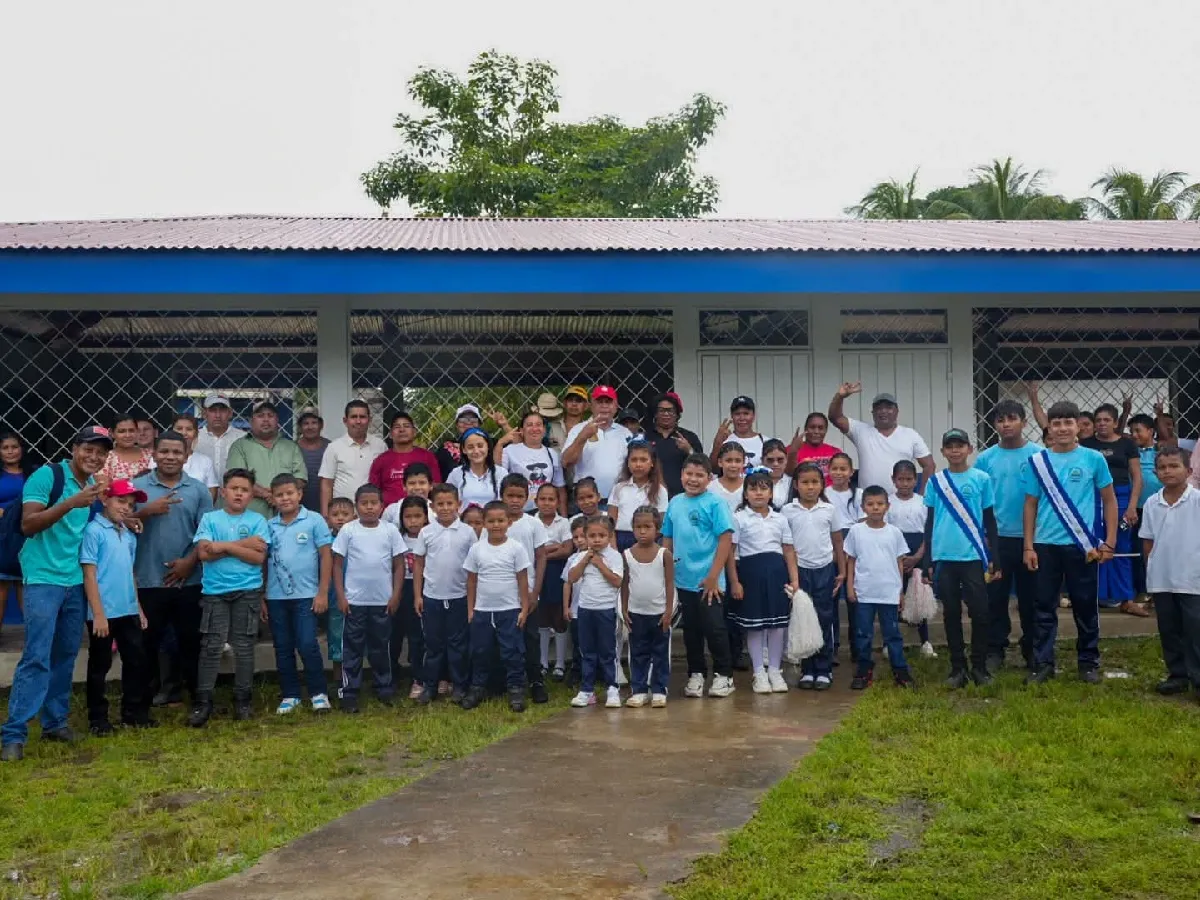
A partir del 2007, el Gobierno Sandinista promovió el Sistema Educativo Autonómico Regional (SEAR), un sistema educativo propio de las Regiones Autónomas que garantiza la educación en las lenguas originarias, la formación docente intercultural, la preservación cultural y la identidad. El SEAR incluye mejoramiento y construcción de centros educativos, dotación de tecnología y servicios básicos dentro de sus instalaciones.
Nicaragua ha definido que la interculturalidad en la educación es un eje transversal para todo el sistema educativo del país, no solo para las Regionales Autónomas, permitiendo la incorporación de los saberes ancestrales y las tradiciones culturales en los procesos de formación nacional.
Nicaragua ha establecido dos Universidades Interculturales Comunitarias de Educación Superior, URACCAN y BICU, con financiamiento Estatal, que han sido claves en la formación de profesionales indígenas y afrodescendientes.
Actualmente las Universidades han ampliado sus áreas de cobertura con la implementación de las universidades del campo, estableciendo un proceso de formación profesional en la mayoría de los territorios indígenas y afrodescendientes.
El Instituto Nacional Tecnológico ha establecido escuelas para la formación técnica en ambas Regiones Autónomas.
Se cuenta con dos Escuelas de Formación de Docentes Interculturales; uno en cada región, los cuales fortalecen las lenguas e identidad cultural de los pueblos originarios.
IV. Sistema de Producción, Consumo y Comercio de los Pueblos Originarios del Caribe de Nicaragua
Durante los últimos 15 años el Gobierno Sandinista ha desarrollado un conjunto de proyectos agroalimentarios en estos territorios para apoyar la seguridad alimentaria y la capacidad económica de las comunidades, amenazadas por el cambio climático, que genera condiciones adversas para la producción alimentaria.
Una base central del nuevo escenario económico productivo de las comunidades originarias y afrodescendientes es el marco legal que asegura el uso razonable y sostenible de los recursos naturales, en beneficio de las comunidades, reconociendo que pueblos originarios y afro-descendientes tienen derecho a la administración de sus recursos naturales y que el 25% de los impuestos generados por su aprovechamiento regresan a las comunidades indígenas y afrodescendientes, asegurando que todos los permisos forestales en sus comunidades se emiten a favor de estos.
En la actividad pesquera se establece que las tres millas en la zona costera y los cayos e islas son de uso exclusivo para la pesca artesanal, con beneficio directo de las comunidades indígenas y afrodescendientes.
Para la aprobación de todo lo concerniente al aprovechamiento de los recursos naturales en los territorios indígenas y afrodescendientes, el Estado de Nicaragua ha establecido que se debe cumplir con el consentimiento previo libre e informado de la comunidad y el territorio correspondiente.
En materia de Medio Ambiente se han establecido diversas estrategias para el manejo de las áreas de Reservas y Conservación de los territorios de los pueblos originarios y afro-descendientes, entre ellos las Reservas de Biosfera o Reservas Naturales Cayos Miskitus, Bosawas, Indio Maíz y Wawashang, las que son manejadas a través de un mecanismo de manejo conjunto entre el Estado Nacional y los Territorios Indígenas y Afrodescendientes.
V. Fortalecimiento de la Identidad Cultural y Recreativa
Como hemos reiterado anteriormente, previo a la Revolución en 1979 los pueblos originarios y afrodescendientes vivieron en la mayor exclusión, invisibilizados de la vida nacional y sometidos a la mayor pobreza y miseria.
Un importante avance en estos años ha sido la revitalización cultural y el sentido de orgullo y pertenencia de los miembros de estas comunidades a su acervo identitario.
El reconocimiento legal de sus derechos, el empoderamiento económico, la seguridad alimentaria y en especial, la propiedad comunal sobre la tierra, ha brindado condiciones favorables para que estas comunidades puedan vivir, preservar y hacer florecer su identidad cultural.
En el ámbito internacional, la cultura Garífuna ha sido reconocida por la UNESCO como Patrimonio Inmaterial Intangible de la Humanidad. Complementariamente el Estado de Nicaragua, a través de la Asamblea Nacional y los Consejos Regionales Autónomos, han reconocido la cultura, las tradiciones y las lenguas de todos los pueblos originarios y afrodescendientes como Patrimonio de la Nación.
Especial énfasis ha puesto el Gobierno Sandinista en la construcción y mejoramiento de infraestructura deportivas, culturales, recreativas en todos los municipios que fomentan y promueven la recreación sana de su población.
VI. Conclusiones
Nicaragua tiene uno de los marcos jurídicos más avanzados en el mundo para el reconocimiento de los derechos de sus pueblos originarios y afrodescendientes.
Cuenta con una Estrategia de Desarrollo Humano que incluye y promueve el bienestar de esta población y que ha revertido su histórica exclusión y miseria. La Estrategia de Desarrollo de la Costa Caribe de Nicaragua se centra en un modelo de desarrollo humano integral, sostenible y autónomo, enfocado en la restitución de derechos, reducción de la pobreza y el fortalecimiento de la identidad cultural de los pueblos indígenas y afrodescendientes.
La legislación nicaragüense reconoce la naturaleza multicultural, multiétnica y plurilingüe del Estado de Nicaragua, reafirmando su compromiso con los derechos histórico de los pueblos indígenas y afrodescendientes, promoviendo un modelo de desarrollo con identidad, equidad y justicia social en armonía con los principios del sistema internacional.
Hemos logrado articular los derechos históricos de la población indígena y afrodescendiente con sus aspiraciones de bienestar y progreso, creando condiciones para una vida en paz y armonía con pleno disfrute de sus recursos y derechos.
¡Muchas gracias!
--------------------------------------------
Versión en inglés
ADVANCES IN THE RIGHTS OF
INDIGENOUS AND AFRO-DESCENDANT PEOPLES
CARIBBEAN COAST OF NICARAGUA
The Indigenous Peoples (Miskito, Mayagna, Ulwa and Rama) and Afro-descendant Peoples (Creoles and Garifuna) of Nicaragua live primarily in two Autonomous Regions of the Caribbean coast and a Special Development Zone in the Upper Wangki-Bocay region.
Before the Sandinista Revolution of 1979, the Indigenous and Afro-descendant Peoples of the Nicaraguan Caribbean Coast were excluded from the social, economic, and political life of the country, isolated from the rest of the nation by a lack of communication routes and without a real and effective presence of state institutions, which left this population in total neglect.
The forms of exploitation generated by the extractive model of the economic enclaves inherited from the colonial and neo-colonial periods created the deepest conditions of misery and poverty, which, combined with exclusion, produced the most deplorable economic and social indicators in the country.
The Sandinista Popular Revolution, between 1979 and 1990, brought about a structural transformation based on the recognition of the ancestral rights of the indigenous and Afro-descendant population. The new Political Constitution, approved in January 1987, included respect for their cultural identity, languages, and customs.
The constitutional recognition of the ancestral rights of the Indigenous and Afro-descendant population was more precisely expressed in the Statute of Autonomy, approved in October 1987. This statute provides the framework for the real inclusion of this population, allowing, for the first time in history, their full participation in the political, economic, and social life of the country and the effective recognition of their rights. These rights include communal land tenure, effective representation in national political life, and recognition of the unique forms of organization of each people and community, laying the foundation for the full development of their well-being, with full respect from the State for their cultural identity, traditions, and customs.
During the last 18 years, the Sandinista Good Government has expanded these rights, facilitated greater participation and leadership at the communal, regional, and national levels, generating greater well-being for the Indigenous and Afro-descendant population living in the Autonomous Regions of the Caribbean of Nicaragua. This has reduced poverty, eradicated exclusion and destitution, and strengthened inclusion and national unity.
I. Legal Framework. Recognition of Rights
Nicaragua has one of the most advanced legal frameworks in the world regarding the effective recognition of the rights of Indigenous and Afro-descendant peoples.
The Political Constitution of the Republic recognizes the right of Indigenous and Afro-descendant peoples to live and develop according to their own forms of social, cultural, and political organization, as well as respect for their communal lands.
The Law of Autonomy of the Caribbean Coast Regions of Nicaragua, which has Constitutional Status, guarantees the effective participation of Indigenous and Afro-descendant peoples in the management of their own affairs.
A set of specific laws, such as the Law on Land Demarcation and Titling, the Law on Languages, the General Law on Education (which incorporates the Regional Autonomous Education System), the General Law on Health (which incorporates the Health System with an Intercultural Approach and recognizes Traditional and Ancestral Medicine), and the Decree Creating the Alto Wangki-Bocay Special Development Region, form part of the National and Regional Legal Framework that promotes the specific rights of the indigenous and Afro-descendant communities of the Nicaraguan Caribbean.
A constitutional provision establishes that no project that develops in, or affects, the territory or indigenous and Afro-descendant communities can be implemented without the express approval of the Regional Autonomous Institutions (Communal, Territorial, and Regional Governments).
All these legal instruments define the multiethnic, multilingual, and multicultural character of the State of Nicaragua. They allow Nicaragua not only to recognize its diversity, but also to transform it into a strength for development, social peace, and governance, consolidating a unitary, inclusive state with its own identity.
Additionally, the State of Nicaragua has ratified international conventions such as the United Nations Declaration on the Rights of Indigenous Peoples, ILO Convention 169, and the United Nations 2030 Agenda, which strengthen the national legal framework.
II. Strengthening the Autonomy Regime. Land Titling and Legal Security
The approval of the Autonomy Regime represented an unprecedented step by the Republic of Nicaragua in recognizing the ancestral rights of its indigenous and Afro-descendant populations.
The Autonomy Law outlines a regionally governed institutional framework based on two Autonomous Regional Councils, elected in 30 electoral districts. These councils reflect the cultural and ethnic characteristics of each district, ensuring the representation of each Indigenous and Afro-descendant community in the composition of each Regional Parliament.
The Autonomy Law defines and regulates the relationship between the National Government and the Autonomous Institutions, outlining the rights and obligations of each party.
The Land Demarcation and Titling Law defines the relationship between the National Government and the Regional, Communal, and Territorial Governments with respect to ancestral territorial rights.
Starting in 2007, the Sandinista Government gave extraordinary impetus to the land demarcation and titling process, titling 37,000 km² in 23 Indigenous and Afro-descendant Territories—a global milestone, as it has granted titles to nearly 30% of the national territory in favor of Indigenous and Afro-descendant peoples.
The Autonomous Regional, Territorial, and Communal Governments, together with the National State Institutions, have established a coordination and collaboration mechanism on matters related to participation in education, health, transportation, natural resource management, citizen security, food security, and human security, strengthening the fight against poverty and the recognition of ancestral rights.
These coordination and collaboration mechanisms also strengthen the free, prior, and informed consent process regarding proposals from the National Government within and concerning the territories and communities.
III. Promoting Well-Being. Reducing the Historical Gap
a. Road Infrastructure. The End of Historical Isolation
Until 2007, the Nicaraguan Caribbean region had only 68 km of paved roads. Neither of the two regional capitals had reliable land connectivity with the rest of the country, nor did the vast majority of the municipalities in these regions.
Since 2007, the Sandinista government has built more than 700 km of concrete roads, connecting all municipalities, except those that are islands, to the rest of the country by land.
The construction of concrete roads and more than 50 bridges over the last eight years has united both regional capitals with the rest of the country, ending the historical physical separation and promoting trade, production, safe movement for families, and access to more and better public and private services.
This investment in road infrastructure has been accompanied by investments in dignified means of transportation, which did not previously exist, improving the safety and quality of transportation services for the indigenous and Afro-descendant populations.
The historic advances in land connectivity have also been accompanied by significant investment in improving air connectivity through the airports of Bilwi, Bluefields, and Corn Island, and water connectivity through the ports of Rama and Bluff, as well as the improvement of small community docks through the Community Dock Improvement Program.
The start of construction on the Caribbean Deepwater Port, which, together with the recently built concrete highway, will finally allow Nicaraguans access to major markets in North America, Europe, the Caribbean, and other regions of the world.
b. Electrification, Water, and Sanitation
Until 2007, only 25% of the population in the Caribbean Regions had access to electricity, exclusively in the regional capitals and some municipalities, with irregular service from isolated power plants. Currently, electricity coverage has reached 99.5%.
Telecommunications, practically nonexistent, have expanded to all municipalities, territories, and communities in the regions, thanks to the construction of more than 2,800 km of fiber optic cable and the availability of cell phone service in all municipalities.
A notable advance has been access to water and sanitation for populations settled in the regional and municipal capitals, which was nonexistent before 2007.
c. Intercultural Health
One of the greatest advances in the well-being of families in the Regions has been free access to healthcare through the Family and Community Health Model. This model recognizes, respects, and incorporates the ancestral knowledge of traditional medicine, practiced by traditional healers, midwives, and volunteer collaborators from Indigenous and Afro-descendant communities. Together with nurses, general practitioners, and specialists, along with health brigades, health fairs, and mobile clinics, they guarantee the permanent presence of free healthcare services in all territories and communities.
Additionally, a mechanism for the continuous training of human resources specific to Indigenous and Afro-descendant territories has been established. Infrastructure and equipment have been strengthened with state-of-the-art technology to provide comprehensive care within the health services.
Health posts, primary hospitals, and maternity homes with their respective medical and nursing staff have been built and improved in all municipalities of the regions, as well as in communities where they previously did not exist.
Health posts, primary hospitals, and maternity homes with their respective medical and nursing staff have been built and improved in all municipalities of the regions, as well as in communities where they previously did not exist.
The construction of the new 220-bed Regional Hospital in the city of Bilwi represents the largest hospital in the Caribbean of Central America, offering 19 specialties and all necessary medical services. This reality clearly breaks with a past of exclusion, poverty, and absence of the State.
d. Intercultural Education and Community Universities
In 1979, illiteracy in the Caribbean Regions reached an average of 75%, reaching up to 90% in some areas. The Sandinista Revolution carried out the National Literacy Campaign in 1980, and Literacy in Native Languages, reducing it to the national average of less than 10%. Starting in 2007, the Sandinista government promoted the Regional Autonomous Education System (SEAR), an educational system specific to the Autonomous Regions that guarantees education in native languages, intercultural teacher training, cultural preservation, and identity. SEAR includes the improvement and construction of educational centers, and the provision of technology and basic services within their facilities.
Nicaragua has defined interculturality in education as a cross-cutting theme for the entire National Education System, not just for the Autonomous Regions, allowing for the incorporation of ancestral knowledge and cultural traditions into national educational processes.
Nicaragua has established two Intercultural Community Universities of Higher Education, URACCAN and BICU, with state funding, which have been key in the training of Indigenous and Afro-descendant professionals.
Currently, the Universities have expanded their coverage areas with the implementation of rural universities, establishing a professional training process in most Indigenous and Afro-descendant territories.
The National Technological Institute has established schools for technical training in both Autonomous Regions.
There are two Intercultural Teacher Training Schools, one in each region, which strengthen the languages and cultural identity of the indigenous peoples.
IV. Production, Consumption, and Trade System of the Indigenous Peoples of the Nicaraguan Caribbean
Over the past 15 years, the Sandinista Government has developed a series of agro-food projects in these territories to support food security and the economic capacity of the communities, which are threatened by climate change, creating adverse conditions for food production.
A central tenet of the new economic and productive landscape for Indigenous and Afro-descendant communities is the legal framework that ensures the reasonable and sustainable use of natural resources for the benefit of these communities. This framework recognizes that Indigenous and Afro-descendant peoples have the right to manage their natural resources and that 25% of the taxes generated from their use are returned directly to these communities. It also guarantees that all forestry permits in their communities are issued in their favor.
In the fishing sector, the three-mile zone along the coast, as well as the cays and islands, is designated for the exclusive use of artisanal fishing, directly benefiting Indigenous and Afrodescendant communities.
For the approval of any matter concerning the use of natural resources in Indigenous and Afro-descendant territories, the State of Nicaragua has established that the free, prior, and informed consent of the corresponding community and territory must be obtained.
In the area of Environment, various strategies have been established for the management of Reserve and Conservation areas of the territories of the native and Afro-descendant peoples, including the Biosphere Reserves or Natural Reserves Cayos Miskitus, Bosawas, Indio Maíz and Wawashang, which are managed through a joint management mechanism between the National State and the Indigenous and Afro-descendant Territories.
V. Strengthening Cultural and Recreational Identity
As we have reiterated previously, prior to the 1979 Revolution, Indigenous and Afro-descendant peoples lived in extreme exclusion, rendered invisible in national life and subjected to abject poverty and misery.
A significant advance in recent years has been the cultural revitalization and the sense of pride and belonging that members of these communities have developed toward their cultural heritage.
The legal recognition of their rights, economic empowerment, food security, and especially communal land ownership, have provided favorable conditions for these communities to live, preserve, and flourish their cultural identity.
Internationally, Garifuna culture has been recognized by UNESCO as an Intangible Cultural Heritage of Humanity. In addition, the State of Nicaragua, through the National Assembly and the Regional Autonomous Councils, has recognized the culture, traditions, and languages of all Indigenous and Afro-descendant peoples as National Heritage.
The Sandinista Government has placed special emphasis on the construction and improvement of sports, cultural, and recreational infrastructure in all municipalities, fostering and promoting healthy recreation for its population.
VI. Conclusions
Nicaragua has one of the most advanced legal frameworks in the world for the recognition of the rights of its Indigenous and Afro-descendant peoples.
It has a Human Development Strategy that includes and promotes the well-being of this population and has reversed its historical exclusion and poverty. The Development Strategy for Nicaragua's Caribbean Coast focuses on a comprehensive, sustainable, and autonomous human development model, centered on the restitution of rights, poverty reduction, and the strengthening of the cultural identity of Indigenous and Afro-descendant peoples.
Nicaraguan legislation recognizes the multicultural, multiethnic, and multilingual nature of the State of Nicaragua, reaffirming its commitment to the historical rights of Indigenous and Afro-descendant peoples, and promoting a development model based on identity, equity, and social justice, in harmony with the principles of the international system.
We have successfully integrated the historical rights of the Indigenous and Afro-descendant population with their aspirations for well-being and progress, creating conditions for a life of peace and harmony with the full enjoyment of their resources and rights.
Thank you very much!