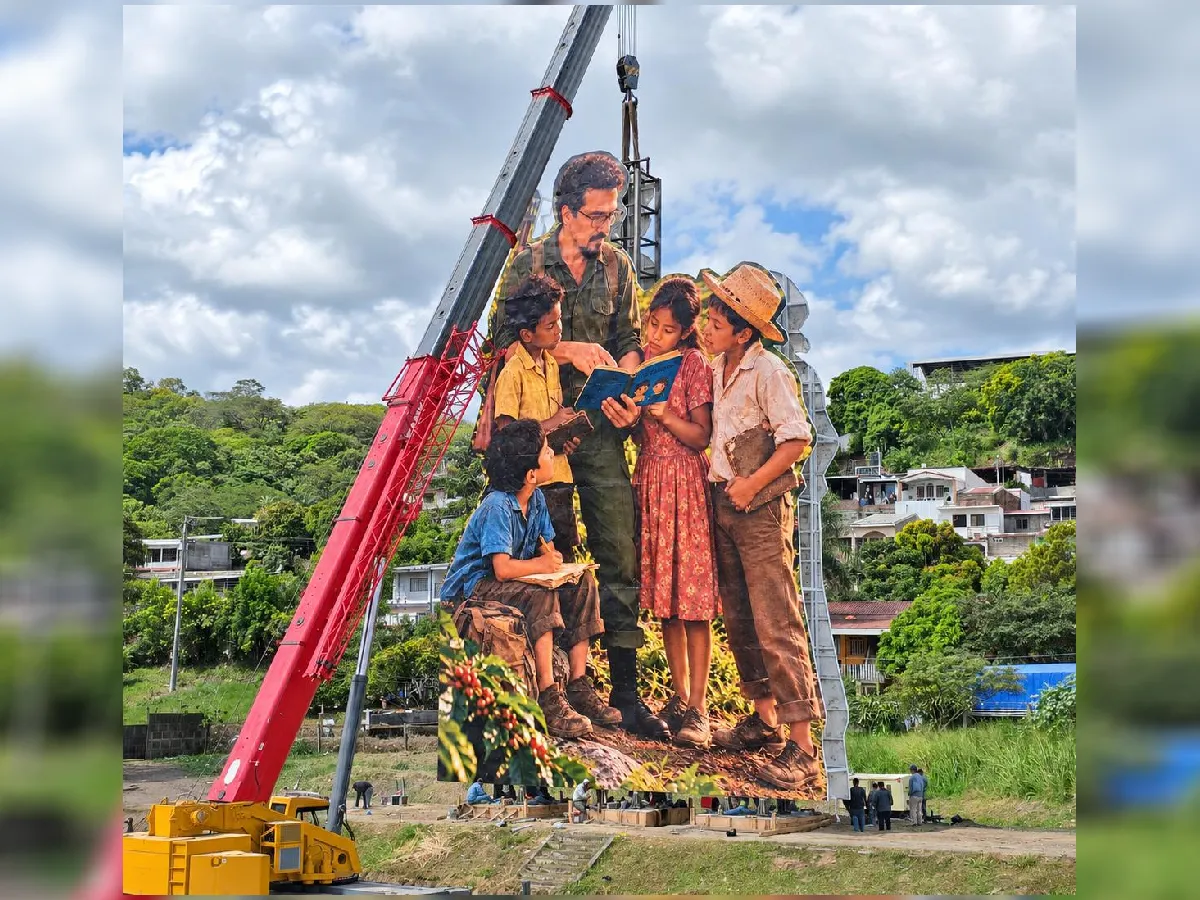








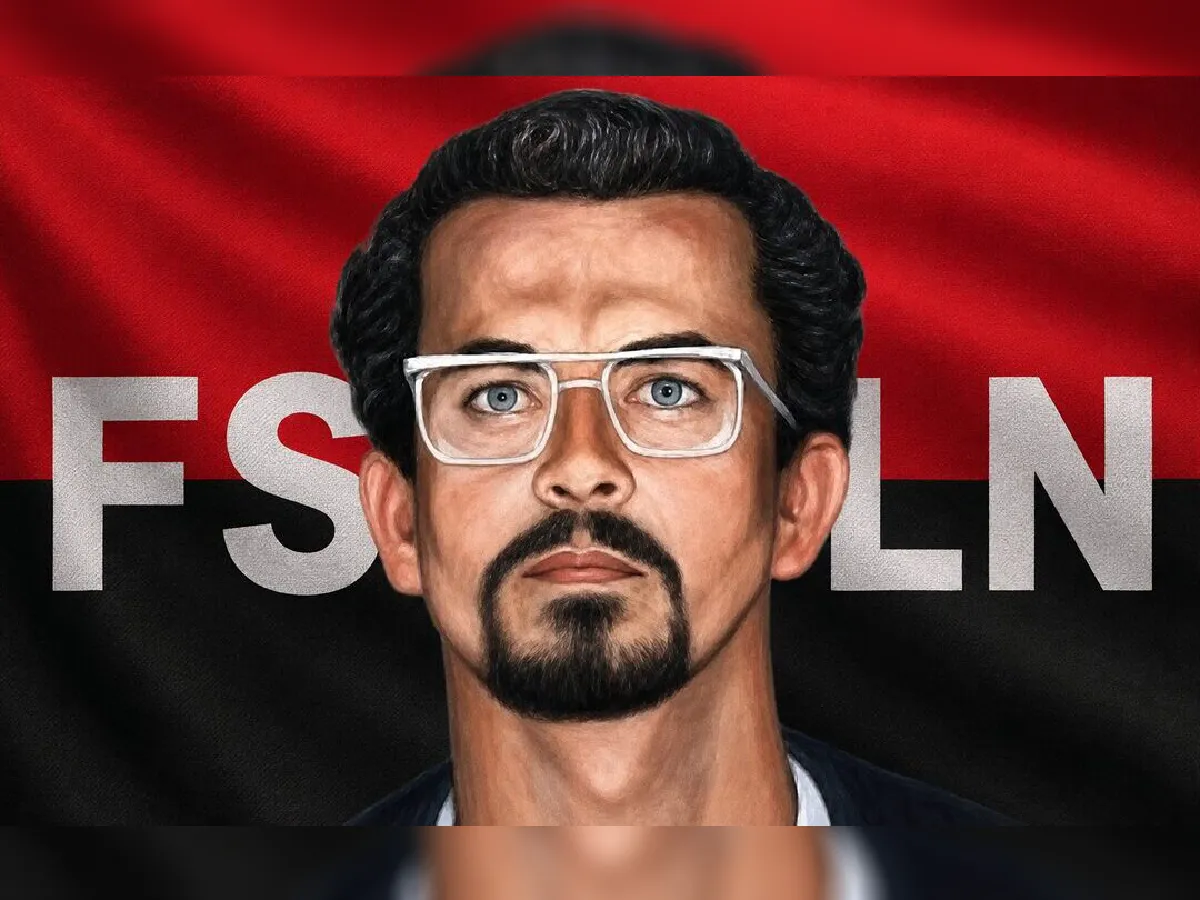
November 8th 2026 marks the fiftieth anniversary of the death of Carlos Fonseca Amador, founder of the Sandinista National Liberation Front. Carlos is one of those men whose existence is measured not only by the years they lived, but by the depth of the ideas they knew how to sow, by the consciences they helped awaken and by the history they helped to transform.
Carlos Fonseca Amador belongs to that category.
In 1961, together with other revolutionary militants, he founded the Sandinista National Liberation Front (FSLN). It was not born as just another organization, but as an attempt to revolutionize Nicaragua’s history, capable of collecting Sandino's legacy and transforming it into a political project able to mobilize generations of Nicaraguans.
Carlos fell in action on November 8th 1976 in the mountains of Zinica. Half a century after his death in combat, his name still occupies a central place in the memory of the Sandinista People’s Revolution. His figure is intimately linked to the construction of the Sandinista identity.
During the seventies, even though the FSLN went through deep strategic differences, articulated in three main trends, Carlos remained an intellectual and political reference point for the entire organization. Unity should not be conceived as an empty organizational formula, rather it should represent the convergence of different forces around a national and popularly held objective. Sandinismo was born precisely from this political and cultural synthesis: a conception of national liberation fusing political independence with socioeconomic transformation. It was not simply to overthrow Somocismo, but to build a different Nicaragua, with the People as the protagonist of their own future.
This is easy to say, but not to achieve. As Mao Tse-Tung said, making a revolution is no gala dinner. An indisputable truth, because any revolutionary process worth the name turns reality inside out as if it were a glove, subverting from top to bottom and bottom to top the terrain where power is disputed, breaking stagnation like a thunderstorm. Thus, it is very unlikely that the table on which the present and the future play out will be elegantly served, nor that the diners will be courteous, well-dressed and worried about etiquette
What usually gives rise to a revolution is the urgent obligation to resist a dictatorship based on hunger and repression. As the process unfolds, the entire context changes, including the protagonists of change themselves, haunted by the fear of not being able to carry their task to the end, when it is also impossible to turn back.
Carlos Fonseca's experience is, in some ways, a question that concerns us all, in whichever latitude we may be, because it leaves us two lessons: to make a Revolution requires both a theory and also a revolutionary practice. The theory, as well as the search for the right instruments to carry it out, cannot be developed in separate moments: a timely symbiosis between both dimensions is needed and especially, above anything else, unity of purpose. In this sense, the value of unity is transcendental, because any division among those transforming reality gifts the enemy the most favorable terrain possible, fertile ground for defense of the status quo.
The history of Nicaragua’s Sandinista People’s Revolution, like that of other revolutions, also reminds us how complex revolutionary experiences are: strategic differences, internal conflicts, mistrust and misunderstandings, obsession with leadership. Since the decision to overthrow a dictatorship is reached with different motivations, perspectives and ambitions, the main task of a revolutionary process is to keep everything together, to conserve every possible strength for the accumulation of energies that will be necessary in order to overcome in the decisive battle.
Precisely in this complexity, in this interweaving of experiences and different tactical presuppositions, the importance of unity emerges. But every unifying process needs a figure to represent it, someone recognized by everyone else for their political, human and relationship qualities with others. That was, above all, Carlos Fonseca Amador. He was the focal point of the unity the Sandinista People’s Revolution needed. He was not only a political leader and a revolutionary combatant: he was a builder of conscience, a militant intellectual and someone who understood the need to provide the national liberation struggle with an overall political vision, a historical memory and a collective project.
Carlos' political greatness lay in his ability to understand that Nicaragua’s liberation could not be the result of isolated actions by particular groups, nor of the simple sum of combatant organizations. A common identity was needed. He worked on the construction of a movement capable of uniting the various strands of socialist thought with the patriotic and anti-imperialist tradition of Sandino, the peasant struggle with the workers, clandestine organization with popular mobilization.
Reading Sandino's works was decisive in the elaboration of his thought. He had a non-doctrinaire Marxist theoretical background. As Marx himself said, by the way, he was sure of only one thing: that he was not a Marxist. With this he expressed the rejection of any ideological or doctrinaire pigeonholing, any dogmatic rigidity, proposing his theories on historical and dialectical materialism ("history is the history of the irreconcilable conflict between classes") as a method of research and political analysis of reality. It is no coincidence that, when asked what communism meant for him, he replied: "It is not a static idea to which one has to adjust. We call communism a real movement which abolishes the existing state of affairs."
Carlos had very clear ideas about the necessary flexibility with which Marxism should be approached in revolutionary theory and in the very political and ideological identity of Sandinismo: "We must study history as Marxists and apply Marxism as Nicaraguans," he said repeatedly. There was unusual lucidity in this anti-dogmatic, pragmatic point of view, a precise idea of the structural differences between a European theory born of the Industrial Revolution, and its applicability to a rural reality, where the oppressed class are the peasants, with all the particularities that characterize them.
Moreover, Nicaragua could not and should not be inspired exclusively by theories conceived elsewhere, as was the case elsewhere on the continent. Nicaragua already had a theory and practice of liberation which were intertwined with the idea of a different society. Sandino, the General of Free Men and Women, had left a powerful legacy: the idea of a sovereign Nicaragua, free from foreign interference, owner of its own destiny. Carlos understood that this memory could not be left in the past. It had to be updated and evolve into a political force capable of speaking to new generations, to peasants, to workers, to students, to all those who opposed the dictatorship of the Somoza family.
Carlos Fonseca’s story was also one of persecutions, arrests, exile and clandestinity. The Somoza dictatorship, with all its repressive apparatus and a deeply rooted power structure, was the adversary against which the Sandinista movement waged its battle.
His death represented a huge loss for the movement. He could not see the triumph of July 1979, nor the great popular demonstrations accompanying it, nor the reunification of the Party he had helped to found. Even so, his name is one of the great symbols of that very victory.
Remembering Carlos Fonseca means, above all, questioning the relationship between national sovereignty and socioeconomic justice, between political organization and popular participation. It means remembering a man who dedicated his life to the construction of a collective project, convinced that history was not some immutable reality, but the result of action by men and women. Carlos' most important legacy was the construction of a common political language, capable of linking Sandino's memory with the aspiration for social emancipation of an entire generation.
Fifty years on, Carlos Fonseca Amador remains the symbol of a time when thousands of men and women imagined a different Nicaragua and mobilized to make it a reality. His legacy belongs, first of all, to the history of the Nicaraguan people, but it is also part of the broader history of the liberation struggles of Latin America. In a continent marked by a history of foreign interventions, military dictatorships, inequalities and aspirations for emancipation, Carlos Fonseca continues to be a benchmark for understanding the relationship between national independence, socioeconomic transformation and popular identity.
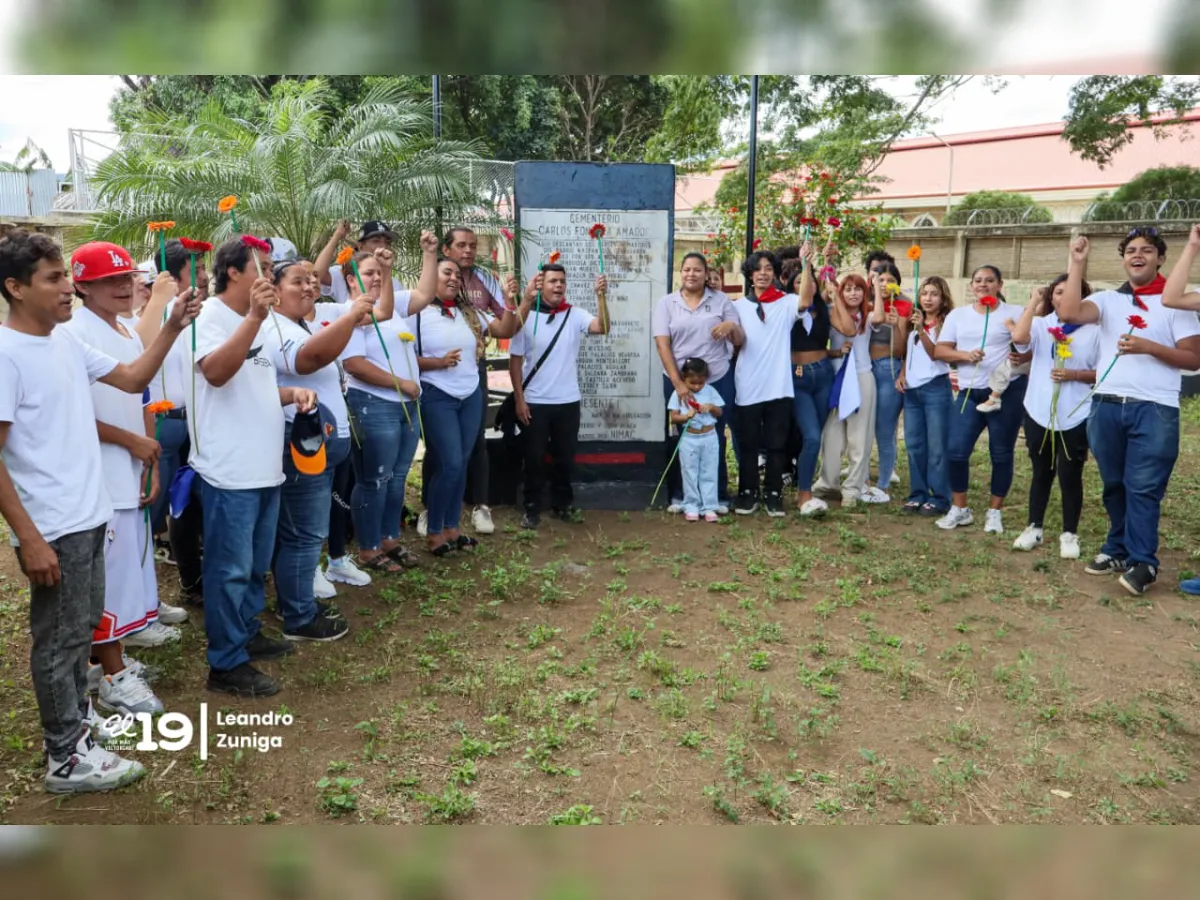
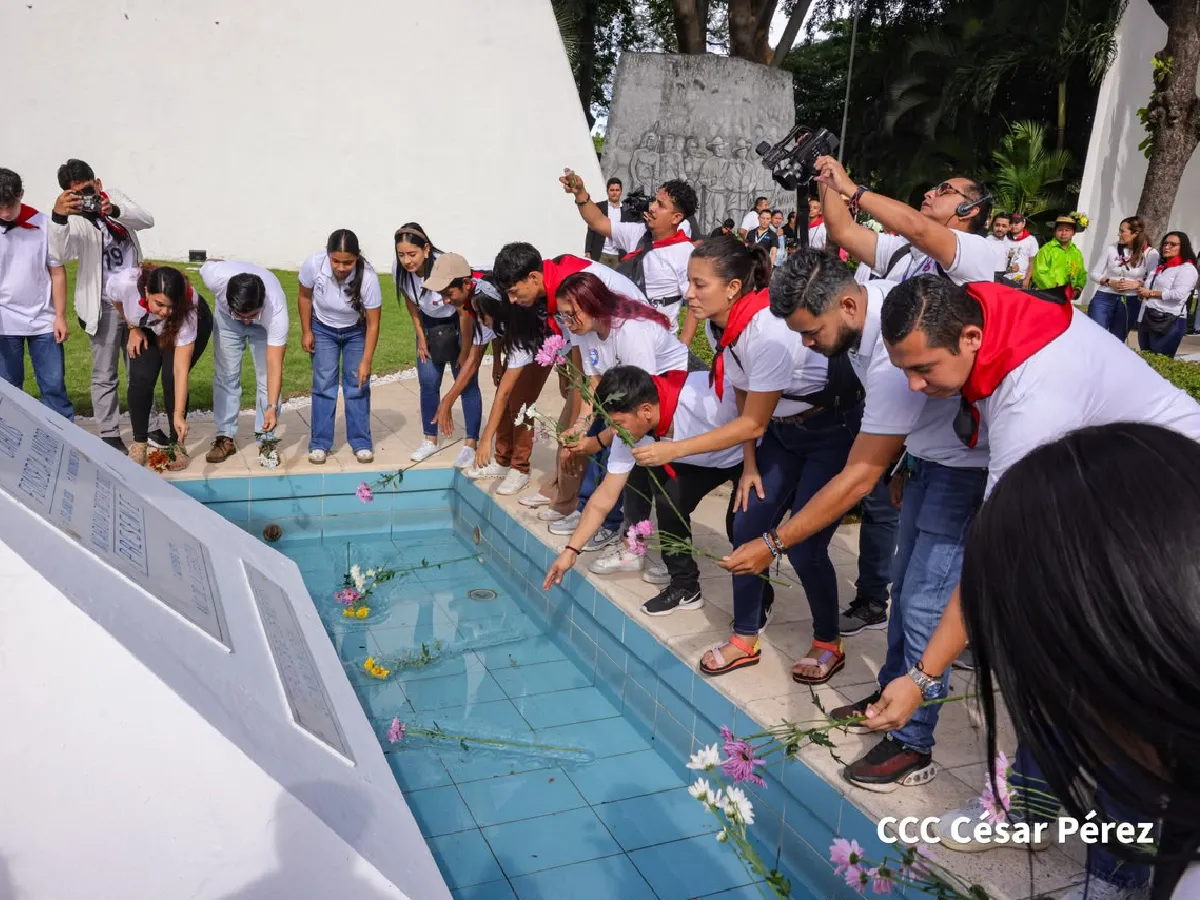
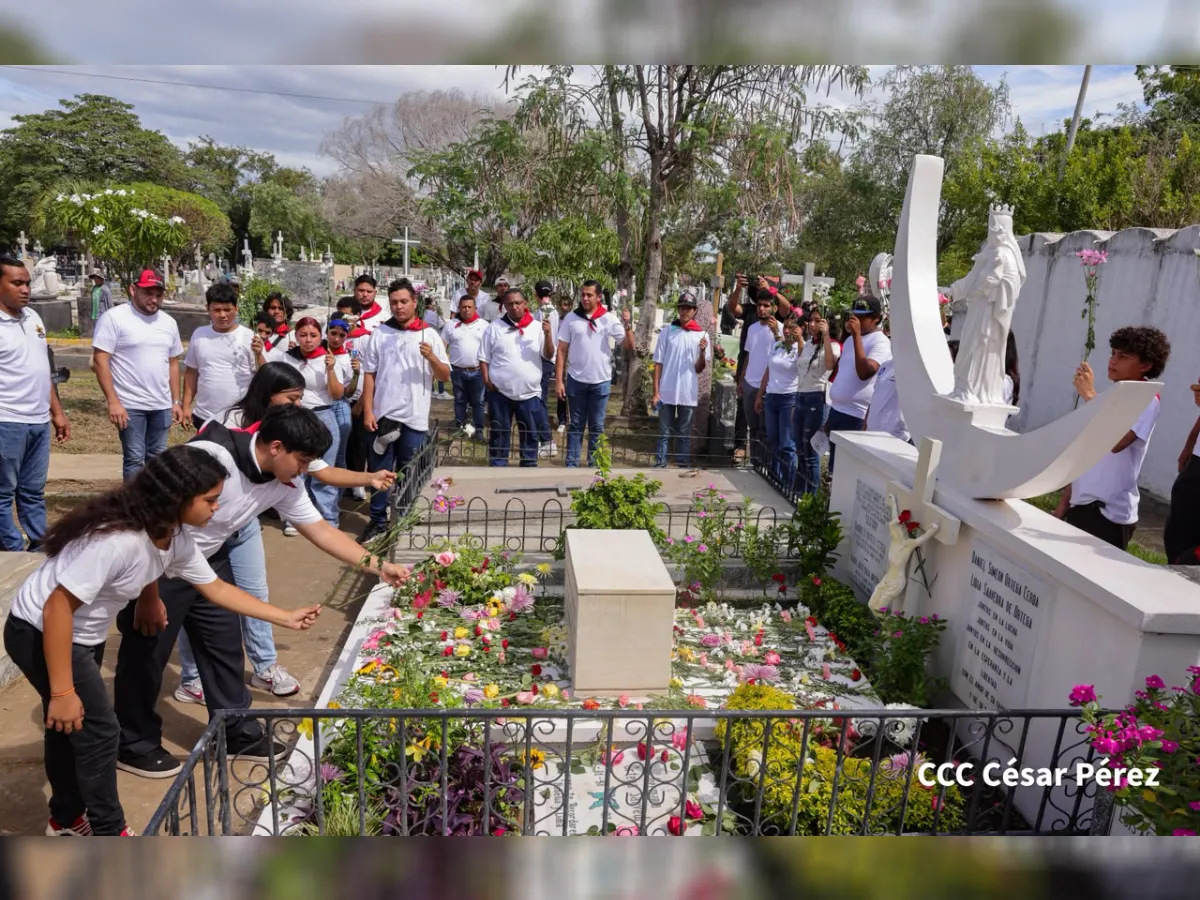
The most significant way to remember him is to return to his history all its depth: that of a revolutionary, an intellectual, a political organizer and, above all, of a man who understood that no liberation project can become history without the ability to unite. Fifty years on, his mausoleum alerts us to the most audacious of missions: uniting everyone under the same flag and bringing under that flag every house, every street, every block wherein the definitive victory of a Blessed and Forever Free Nicaragua lives on.