







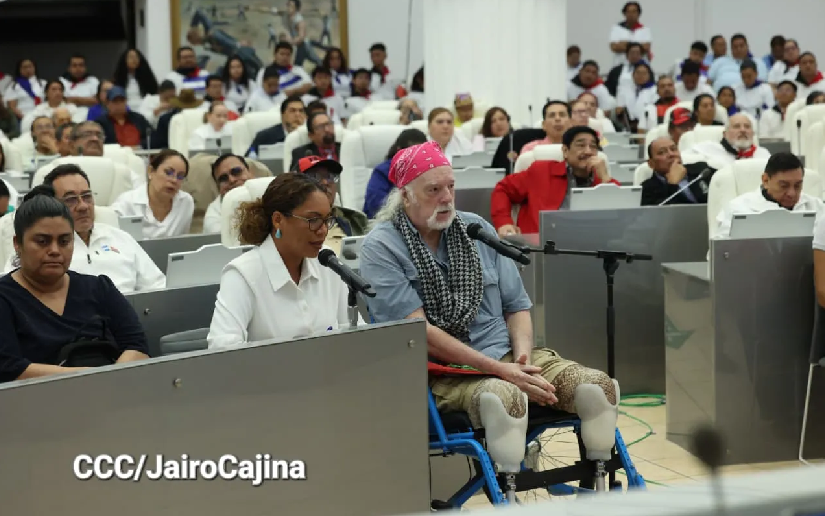
Remitimos esta Extraordinaria, por sencilla, humilde y realista Exposición del Héroe de la Humanidad Brian Wilson, hoy 28 de Abril, Día del Héroe Internacionalista en nuestra Nicaragua, cuando Brian, con su Voz y Milagros describió la impresionante evolución de un Ser Humano que crece, perdiendo el miedo, cumpliendo su Gran Misión Humanista de Reconocimiento de las tragedias, dolores y sacrificios que los Imperialismos imponen a la Familia Humana.
Brian Wilson, Héroe de la Humanidad, norteamericano y nicaragüense por Gracia de Dios, és Grande entre los Grandes y conmueve profundamente con las Verdades Verdaderas de su Corazón Inmenso.
Nos enorgullece su Vida Prodigiosa y su Amor a nuestra Nicaragua Valiente, Bendecida, Siempre Digna, Libre, Cristiana y Solidaria.
Mensaje del Compañero Brian Willson
Héroe de la Humanidad:
“Perdí el Miedo a tener Miedo”
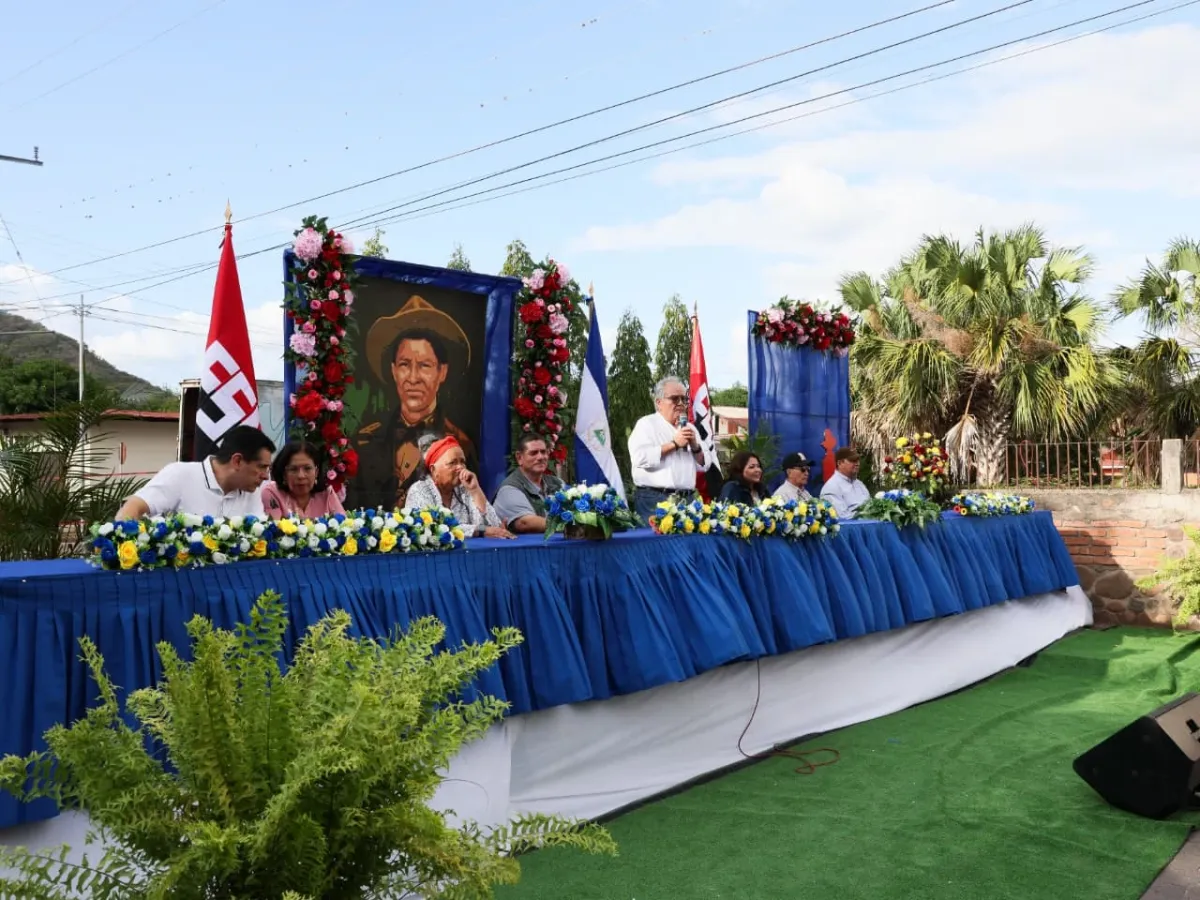
Sesión Especial de la Asamblea Nacional en conmemoración del Día del Héroe Internacionalista.
28 de Abril del 2026
Palabras del Compañero Brian Willson, Héroe de la Humanidad:
Es un honor para mí estar dentro de los héroes nicaragüenses. Soy de un Pueblo muy pequeño en el estado de Nueva York. No tenía ninguna ambición de hacer nada en la vida, más que jugar deporte.
Entonces fui reclutado para ir a la Guerra de Vietnam como miembro del Ejército de los Estados Unidos. Y no tenía ninguna política en particular. No tenía ninguna aspiración, ninguna inclinación política y no me quedó más que ir y participar en la Guerra de Vietnam.
Algo me pasó cuando estuve en la Guerra de Vietnam en los primeros dos meses. Estuve en un pequeño Pueblo en una comunidad. Y mi objetivo, mi misión de ese entonces era ver, asegurar el éxito de nuestra misión.
Nunca se me ocurrió que el fin o el objetivo principal eran los habitantes de esos pequeños Pueblos. Mi ignorancia, yo estaba completamente ignorante ante los intereses y la ideología en que me formaron en el Ejército de los Estados Unidos.
Tuve una guía de Vietnam. Cuando yo estaba manejando mi vehículo Jeep, y él me ayudo en entrar en la primera comunidad que estaba para ser bombardeado.
Me golpeó mucho ver de cómo bombardearon ese Pueblo y encontrarme con tantos muertos y mucha gente que estaba casi muerta.
Caminé hasta donde pude, había tantos muertos, tantos cuerpos, que llegué a un punto donde no podía avanzar más, porque los cuerpos eran tantos que no había ninguna otra forma de poder seguir.
A mis pies estaba una mujer de Vietnam abrazando a tres niños, me supongo que eran sus hijos.
Lo que me impactó fue que la señora que tenía abrazado a sus tres hijos, tenía los ojos abiertos. ¡Abiertos! Y logré ver que, lo que me impactó más fue que no tenía pestañas, todas las pestañas estaban quemadas.
Y me imagino que ella quería huir, tenía horas huyendo con sus hijos, buscando cómo salvarse, pero con esas bombas no tenía cómo.
Era imprescindible para mí entender que nuestro objeto militar era bombardear a estos Pueblos, a estas Comunidades de pescadores y campesinos.
Estuve llorando y no sabía por qué y, ¡¿cómo hacer?! ¡¿Qué hacer?! Estuve en shock. Y el hermano guía de Vietnam me dijo ¿por qué estás llorando?
Estuve en shock incluso de la pregunta que me hizo, porque yo no sabía dónde yo estaba, no me encontraba, estuve en shock, estuve en otro mundo de emociones.
Y fue en ese momento que sentí como un rayo, me impactó y ver los ojos de esa señora… Sentí que yo estaba viendo a los ojos de mi hermana.
Y fue por primera vez que entendí que todos somos un solo Pueblo. Todos somos personas, Hermanas y Hermanos de este planeta. Porque antes de este momento, yo que soy de la clase baja, económicamente hablando, de un pueblo en los Estados Unidos, un estado con un pensamiento superior a los demás.
Entonces, en ese momento sentí algo. No era yo el activista de paz, que ahora en lo que nos reconocemos tantas personas que buscamos la paz y que somos activistas de la paz.
Entender el mundo de donde yo vengo, de los Estados Unidos, la ideología de pensar que somos seres superiores fue algo impactante. Y entendí por primera vez lo que es buscar en el Mundo la Paz.
Entonces, de ese momento en adelante, mi vida no ha sido lo mismo. Y cuando regresé de la guerra, empecé a estudiar sobre los Nativos Americanos. De qué en verdad ha pasado en la historia de los Estados Unidos.
Y entonces, entendí al estudiar, que no hemos sido enseñado la historia verdadera de los Estados Unidos. La historia verdadera que nosotros, que en la ideología que tenemos, de egocéntricos, hemos asesinados a los Nativos o los Pueblos Indígenas, que son los primeros habitantes de los Estados Unidos.
Y no solo eran los Nativos Americanos, sino los Afrodescendientes, que fueron traídos como esclavos para enriquecer a los pocos blancos de los Estados Unidos.
Entonces, en 1986, decidí venir a Nicaragua a estudiar la guerra y también el idioma español, pero también a educarme porque entendí que he sido ideológicamente lavado. La percepción que yo tenía no era la verdadera en la historia del mundo.
Estudié en Estelí y la primera semana que llegué, algo pasó. La contrarrevolución atacó a tres comunidades, a tres familias y asesinaron a once personas.
Y esto me conmovió muchísimo porque no pude creer que estuve reviviendo lo que viví en la guerra de Vietnam. Ver el mismo sistema implementado en estas familias, en estos pequeños pueblos de Estalí, que eran objetos militares. Personas y familias muy inocentes, fue tan asqueroso para mí, fue muy conmovido.
A finales de este mismo año, 1986, regresé a mi comunidad y me reuní con veteranos antiguerras igual que mi persona. Tres que estuvieron conmigo en Vietnam y cuatros otros. Decidimos juntarnos a la protesta ante terroristas de Reagan contra Nicaragua, que tenía el Presidente Reagan en contra de Nicaragua, y así comenzamos nosotros nuestras protestas.
Entonces, estábamos preparando para unirnos a esta gran propuesta, sabiendo que no teníamos esperanza en los Estados Unidos. Y con ese espíritu de lucha por la libertad de Nicaragua, y con ese espíritu nos unimos con otras personas protestantes de Gran Bretaña.
Y en ese momento de prepararnos, perdí mi miedo a la muerte. Sabiendo que a Reagan teníamos que enfrentarlo, teníamos que hacer protesta. Y en ese momento, en la preparación, perdí el miedo a la muerte, perdí el miedo a tener miedo.
Entonces, en la protesta, que fue una ayuna, estábamos nosotros, 47 días, solo consumiendo agua. Y en ese momento, los doctores que nos estaban dando atención, se nos acercaron y nos dijeron, nos informaron que uno de los veteranos estaba a punto de morirse por deshidratado.
Y teníamos que tomar una decisión de seguir o no seguir con esta protesta, que era una protesta de hambre y a base de agua.
Entonces, a finales de este día 47 empezamos a comer, pero nos dimos [cuenta] a la vez, que el FBI nos tenía señalados de terroristas domésticos.
Entonces, una experiencia más de enseñarnos de lo malicioso y lo enfermo en que se había convertido los Estados Unidos. Las políticas en ese entonces [del] Presidente Reagan eran atroces. Entonces, nos regresamos nosotros a Nicaragua por seis meses.
Entonces, estas son algunas de las experiencias, que me guió a mí y a otros Camaradas o Compañeros Veteranos, de bloquear las municiones que venían en los trenes, y que venían de los Estados Unidos para Nicaragua.
En ese entonces, una vez más, confirmado de que el FBI nos tenían señalizados como terroristas domésticos, y que los trenes tenían municiones y que el FBI fue el que dio la orden de no detener el tren con las municiones.
Otra de las experiencias que profundizó el cambio en mí, de hablar en contra del imperialismo perpetrado por los Estados Unidos en Centroamérica.
Y es así que describo estas experiencias, mis experiencias, para que la gente entienda que no me siento Héroe. Que lo que me ha conmovido son los hechos de esta vida y que me ha dado la empatía. Entiendo el sufrimiento, el dolor que sienten los demás.
Y creo que todos, como Humanos, deberíamos sentir lo mismo por los demás.
Es un milagro que yo esté aquí, que sobreviví.
Entonces fue un milagro para mí, porque de donde vengo, de ese pueblo pequeño de donde yo crecí, un pequeño pueblo muy religioso, ahora me he convertido en un Activista, Activista de la Paz, y luego en abogado. Para mí esto no es Heróico, para mí es un deber, la Empatía, la Solidaridad y Entender a los Humanos.
Para mí, el Pueblo de Nicaragua es heroico, así como el Pueblo de Vietnam. Estos dos Pueblos son los que me inspiraron a luchar en contra del Imperialismo. Mi familia de ese pequeño pueblo y los habitantes de ese pequeño pueblo no me podían entender. No me entendían, que para mí, las experiencias vividas en Vietnam y Nicaragua me cambiaron la vida para siempre.
No puedo agradecer al pueblo nicaragüense lo suficiente, agradecerles por la Revolución de Nicaragua. Fue un punto de partida para mí en mi lucha. Fue un punto de partida para mi pueblo entender lo que estaban haciendo los Estados Unidos y el sistema imperialista en contra de estos pueblos y entenderme a mí en mi lucha.
Ni idea tenía yo de que esto iba a ser una sesión muy especial para los Héroes y para el Pueblo nicaragüense.
Para mí, yo venía a ser un invitado más en una sesión del Parlamento nicaragüense. Así que también estoy en shock de todo esto que está pasando y que soy el invitado de honor.
Así que, ¡Muchísimas gracias, Nicaragua! ¡Les agradezco muchísimo!
-------------------------------------------------------
VERSIÓN DE INGLÉS
Transcription of remarks by Brian Willson
In a special session of the National Assembly to commemorate the Day of the Internationalist Heroes
April 28th 2026
It’s an honor for me to be among Nicaragua’s heroes to be with so many heroic people. I came from a very small rural town in New York State. I had no ambition to do anything but play sports. But then I got drafted into the US military for Vietnam. I rally had no particular politics. It would never have occurred to me to avoid Vietnam if I was called, so I went.
Something happened when I was in Vietnam the first month or two. I was in a small village in the Mekong Delta and my job at that moment was to assess the success or failure of bombing missions. It never occurred to me that the target would be an inhabited village. I was a typically naïve, brainwashed US citizen. But I was with a Vietnamese who was my guide that day and he guided me as I was driving the jeep. He was guiding me to the first bombing target.
I was shocked to see everybody dead or almost dead. I walked as far as I could walk without stepping on bodies and then I couldn’t go any further because there were quite a few bodies packed in fornt of me on the ground. At my feet was a young Vietnamese woman holding on to three small children, I assume they were her children.
What was so striking to me was that the woman’s eyes were open and I was staring at her eyes, just kind of in shock and I realized that her eyelids had been burned off by the napalm. And it was obvious that she had been fleeing the bombing which apparently had happened about an hour earlier, trying to flee for safety, but there was no place that was safe from the bombs or the napalm.
It was inconceivable to me that we were specifically targeting what I was told were military targets but in fact they were just inhabited villages with no weapons they were just farmers or fisher people. I was crying and I didn’t know what to make of the whole situation. I was in shock and the Vietnamese guide asked me why I as crying. I was actually so shocked at his question that I felt I was in another world, which apparently I was, emotionally and psychically.
It was at that moment that I felt a lightning bolt had struck me and it was like I was looking at my sister. In other words, for the first time I really understood that we are all one on this planet and I had been raised as a typical lower working class, white male in a rural town thinking that we white people are superior to everybody else, which meant that disabled my capacity to think clearly about what I was seeing.
That day became the first day of a new life and I don’t really know what to call tit, now it would be called as a peace activist but at the time I just knew that the world, the real world was something I had never been faced with, because it was so easy growing up in the United States of America, because we’re “superior” to everybody.
So my life has not ever been the same since and one of the first things I did when I got back from the war was to study the history of what happened to Native Americans in the United States. And of course I had not been taught real history as most of us in the United States had not been taught real history. I discovered of course that we eurocentric people had committed huge atrocities and massacres against the Native Americans. And it wasn’t just Native Americans, it was Africans from Western Africa who were brought tot he hemisphere to be slaves so that the stolen land would be prosperous for the white settlers.
In 1986 I decided to come to Nicaragua to study both the war and the language, just to educate myself because I had been so naïve and so really brainwashed and I came to study in Estelí and the very first week in that school, Reagan’s terrorist Contras had attacked three farming cooperatives near Estelí and killed eleven campesinos.
It really deeply shocked me that I was witnessing the same behavior I had witnessed in Vietnam where virtually every village was considered a military target. I discovered that it was a war of body counts and that was so disgusting and so appalling that when I saw the eleven campesinos coming into the cemetery in Estelí in their coffins I realized this is exactly how the Western world was founded and sustained.
Later that year in the United States I met with a lot of veterans, US veterans who like me had become anti-war, anti-imperial and four of us, three Vietnam War veterans and one World War Two veteran, to go on an open-ended, water only fast on the steps of the Capitol, protesting Reagan’s terrorist wars in Nicaragua and El Salvador.
It was while we were preparing for our fast that we all prepared our wills because we really thought that there was no hope for the United States and that we would wind up fasting to our deaths and we were inspired by the Irish hunger strikers Bobby Sands and many other Irish men who were fighting for freedom from England.
So in effect, we had overcome our fear of death because we knew would probably n ot see any uprising in the United States against Reagan’s policies and so it was in that preparation that I lost my fear of death. In fact we fasted for 47 days on water only on the front steps of the US Capitol building and as of that moment, the doctor told us, the doctor that was kind of guiding us in the fast said to us that one of the other veterans was going to be near death if we didn’t start consuming calories.
So we had to discuss whether we were going to continue the open-ended fast or stop to save one of us who was near death. So at the end of the 47th day we began to eat but we also discovered that the FBI had investigated us as domestic terrorists, believe it or not.
So that was another experience of realizing what a sick and debased culture the United States of America had become. And that led to more actions in the United States against Reagan’s policies but three of us came to Nicaragua at the end of that fast and spent six weeks in Nicaragua in the fall and winter of 1986.
So those were some of the experiences that led to me and to other veterans to block munitions trains that were carrying munitions for Nicaragua and El Salvador, And it was at that time that I discovered that the FBI had considered us fasters as domestic terrorists, which explained why the train that was carrying the munitions was ordered not to stop. Another experience that of course changed my life even more deeply to basically join in solidarity with humanity everywhere and to speak out and work against US imperialism worldwide, not just in Latin America.
So I describe these experiences to help people understand why one would not feel heroic at all, but just simply following the empathy that I feel for other people and the suffering of other people. So the idea of being a hero never occurred to me and I was just doing what I thought a human being should do when they’ve been thrust into these experiences where all the suffering becomes so obvious.
It was a miracle that I survived being run over by the train. Again, I grew up in a small town in a lower class family very religious and it never occurred to me that I would become an activist or that I would become a lawyer. It’s not heroic. It’s following the empathy of your heart.
So to me the people of Nicaragua are heroic as are the people of Vietnam. It inspired me to join them in the struggle against Western imperialism led by the United States.
Of course my family back in this little town couldn’t possibly understand what I was thinking or what I was doing because it was just not anything anyone there would have thought of, excpet I was thinking about it because of my experiences.
So I cannot be thankful enough for the Nicaraguan Revolution because it was a beacon to the whole world and certainly in my world and certainly to many people in the United States so it’s kind of like I am joining Nicaraguans in the struggle against imperialism and I do it with great appreciation,
I actually didn’t have any idea that this was a special session of the Nicaraguan Assembly. I thought I was just going to come and witness one of the Assembly meetings, so I’m kind of in shock that this is all happening and that I am a guest. So thank you Nicaragua. Thank you very very much.